Jackie’s story
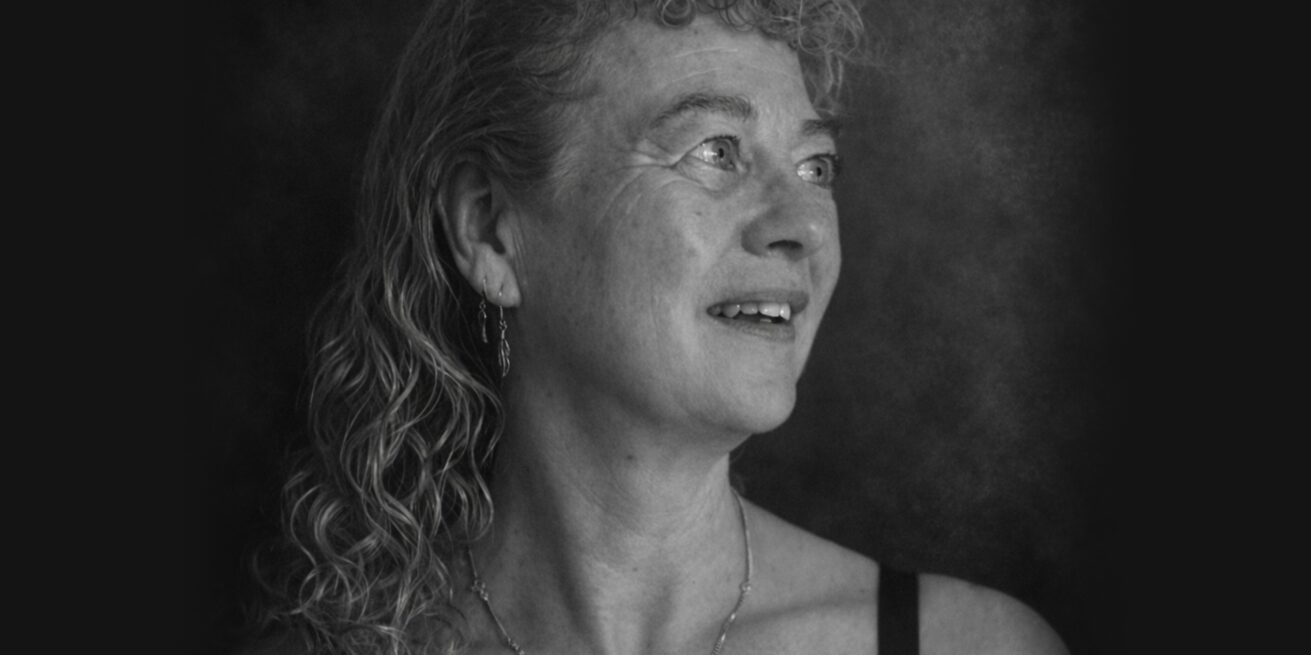
before all this, I honestly felt the fittest and healthiest I’d ever been in my life. I’d finished work four years earlier, I was looking after my granddaughter, I was still a governor at a local school, and I was volunteering as a Childline counsellor. I’d even been brave and had my cataracts done, which meant I’d had to take a break from running and swimming — the two things that are basically part of who I am. But I’d just signed up for the Great North Run. Life felt full and good.
And then the brown envelope dropped on the mat.
It said I needed to come back after my routine mammogram. And I froze. I’ve never frozen like that in my life. I went pale, I couldn’t speak. Even though it only said I needed extra scans or maybe a biopsy, something deep inside me knew it wasn’t going to be simple. And it wasn’t. They still told me it probably wasn’t cancer… until the morning of my appointment, when they rang and said, “We can’t do this over the phone. You need to come in.” And that’s when I knew.
I had a lumpectomy. I didn’t want reconstruction — my son was getting married a couple of months later, and I wanted to be well for that. I don’t regret it for a second. I look at that scar every day. It’s neat and amazing, and I don’t know how they did it, but it’s the physical reminder that I’ve been through something huge.
Then came the two-week wait to see if I needed chemo. I didn’t. I cried with relief. The thought of losing my hair terrified me — I didn’t want to be at my son’s wedding with no hair. It sounds vain, but it was real.
I pushed the boundaries, as I always do. The leaflet said no physical activity for six weeks, but it also said I could go back in the pool after three. And I thought, well, if swimming counts as physical activity, then running must too. So I ran. And I went to my son’s wedding, which was beautiful and full of love, even though I felt like a bit of a space cadet getting there.
Then came the tablets, the bisphosphonates, then radiotherapy — five days of really intense treatment that absolutely wiped me out. And eighteen days later, I did the Great North Run.
It was the most incredible experience. You walk almost as far getting to the start line as you do running the race. I walked past the pens and saw the woman who runs topless after her double mastectomy (Louise Butcher), and I was just in awe. When I got to my pen, I saw a young woman in a Maggie’s vest. I went over and said thank you, because Maggie’s had saved me. She burst into tears. She was running for her dad who’d recently died. Then I met another woman in a Maggie’s vest with her own story. And as I ran, I saw so many women in Breast Cancer Charity vests. I tapped every one of them on the shoulder and thanked them for doing it - for me.
It was so human. So full of people doing things for other people. Marie Curie vests with names on the back, blood cancer charities, every story imaginable. And then you come over that last hill. An old guy had told me not to run down it because people fall, but of course I ignored him. I ran. And as I turned the corner, I heard my friend Jackie shout, “There she is!” And I think that was the day my husband smiled the most through this whole journey. He was so proud.
Running during treatment was the only time I didn’t feel like I had breast cancer. It was my escape. My head stopped thinking. My body just did what it knew.
Then came the hormone tablets, and the fatigue — the journey I’m still on. I haven’t found my place with them yet. And yes, I’m ridiculously doing a 10k soon, and a long swim, and two half marathons… but we won’t talk about those.
I’m just finding my way. That’s all any of us can do. And honestly, the only words I have for this whole thing are: it’s the biggest headfuck I’ve ever come across in my life.
Early intervention matters - prioritise your health.
Accelerate action